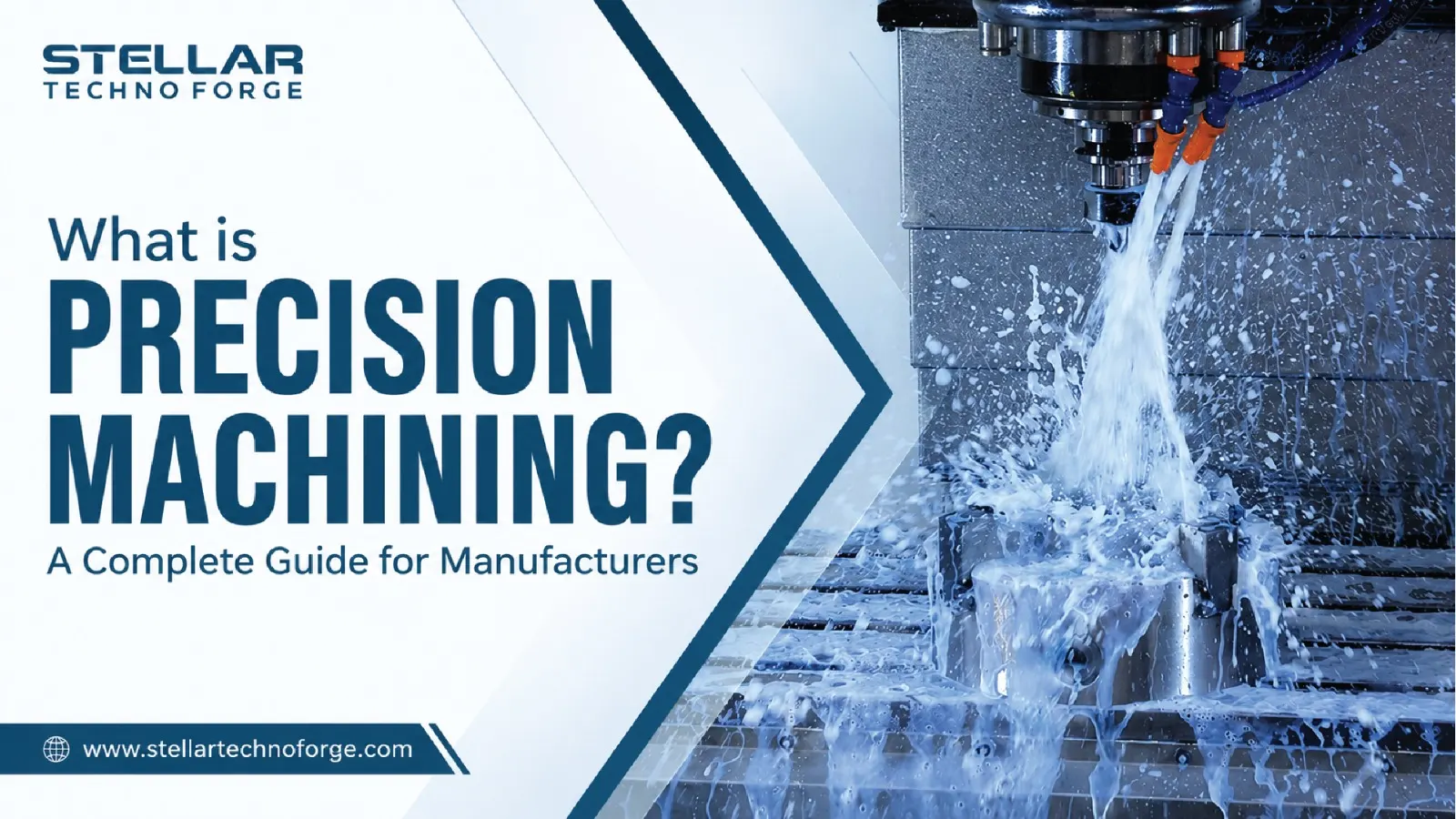
In today's competitive manufacturing landscape, precision is no longer optional—it's a necessity. Industries such as automotive, aerospace, oil & gas, agriculture, medical equipment, and industrial machinery rely on components that meet exact specifications with minimal tolerances. This is where precision machining plays a vital role.
Precision machining is an advanced manufacturing process that transforms raw materials into highly accurate, durable, and complex components using computer-controlled machines and specialized cutting tools. Whether producing a single prototype or thousands of production parts, precision machining ensures consistent quality, improved performance, and reduced waste.
In this guide, we'll explore what precision machining is, how it works, its benefits, applications, and why choosing the right manufacturing partner is essential for your business.
Precision machining is a manufacturing process used to create parts with extremely tight dimensional tolerances and superior surface finishes. The process removes material from a workpiece using advanced machine tools such as CNC milling machines, CNC turning centers, drilling machines, grinding machines, and multi-axis machining centers.
Unlike conventional machining, precision machining is driven by CAD (Computer-Aided Design) and CAM (Computer-Aided Manufacturing) software, allowing manufacturers to produce complex geometries with exceptional accuracy and repeatability.
The result is high-quality components that fit perfectly, function reliably, and meet strict industry standards.
The precision machining process typically involves the following steps:
Engineers create a detailed 2D drawing or 3D CAD model containing dimensions, tolerances, material specifications, and surface finish requirements.
The appropriate material is selected based on the application's strength, durability, corrosion resistance, and operating environment.
Common materials include:
The CAD model is converted into CNC machine instructions using CAM software. These instructions guide the machine throughout the manufacturing process.
The CNC machine removes material using precision cutting tools through operations such as:
Every finished component undergoes rigorous quality inspection using precision measuring equipment such as:
Only components meeting specified tolerances proceed for packaging and delivery.
Removes material using rotating cutting tools to produce complex shapes, slots, holes, and intricate features.
Ideal for manufacturing cylindrical parts such as shafts, pins, bushes, and threaded components.
Creates precise holes with excellent positional accuracy.
Improves dimensional accuracy and surface finish while achieving extremely fine tolerances.
Used for intricate shapes and hard materials that are difficult to machine conventionally.
Modern CNC machines can achieve tolerances within a few microns, ensuring perfect component fit and performance.
Computer-controlled machining eliminates human error and ensures repeatable production across every batch.
Automation reduces production time while maintaining consistent quality.
Precision machining enables the production of intricate designs that are difficult or impossible using traditional methods.
Optimized machining paths minimize raw material consumption and reduce manufacturing costs.
Superior finishing reduces or eliminates the need for secondary operations.
Automated production processes help manufacturers deliver components on schedule.
Precision machining is essential across numerous industries, including:
Each industry depends on precision-machined components to ensure safety, efficiency, and long-term reliability.
Examples of precision-machined parts include:
Quality control is a critical part of the machining process. Even the smallest dimensional variation can affect the performance of an entire assembly.
Reliable manufacturers implement strict inspection procedures that include:
These practices help ensure that every component meets customer specifications and industry requirements.
When selecting a precision machining manufacturer, consider the following factors:
Partnering with an experienced manufacturer ensures reliable production, reduced lead times, and consistent product quality.
The manufacturing industry is rapidly evolving with the adoption of Industry 4.0 technologies. Modern precision machining facilities increasingly use:
These innovations improve productivity, reduce downtime, and enable manufacturers to meet the growing demand for high-quality engineered components.
Precision machining is the backbone of modern manufacturing, enabling industries to produce highly accurate, reliable, and durable components for demanding applications. From advanced CNC machining and stringent quality control to efficient production processes, precision machining ensures products meet the highest standards of performance and consistency.
Whether you require custom-engineered parts, precision-machined components, or large-scale production, partnering with an experienced precision machining company can help improve product quality, optimize manufacturing efficiency, and support long-term business success.
At Stellar Techno Forge, we are committed to delivering precision-engineered components that meet exact customer specifications through advanced manufacturing technology, skilled craftsmanship, and rigorous quality control. Contact our team today to discuss your machining requirements and discover how we can support your next engineering project.