
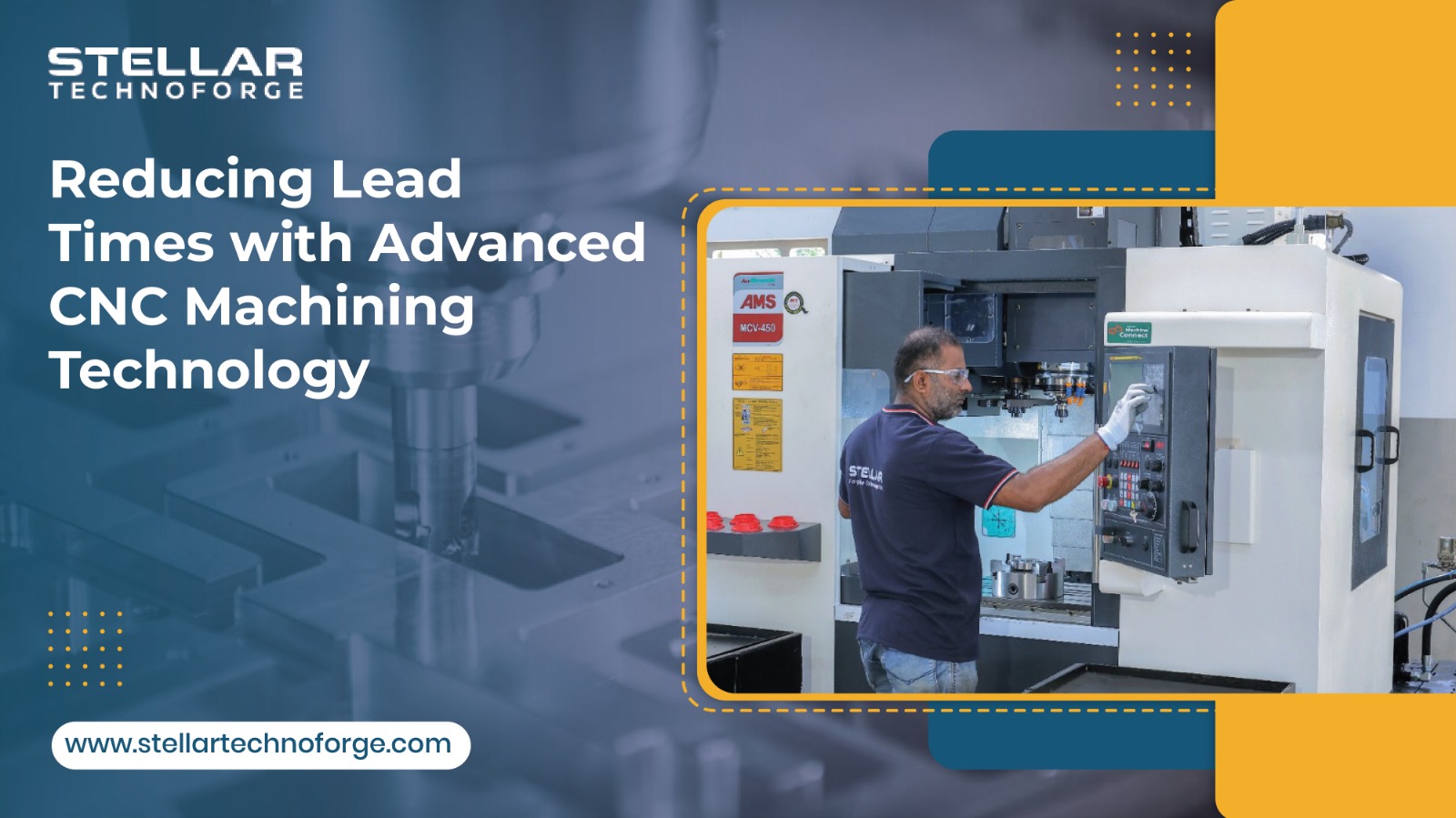
In today’s fast-moving manufacturing world, speed is no longer a luxury. It is a necessity. Customers expect quicker deliveries, frequent design updates, and consistent quality. This is where lead time becomes a critical factor. Long lead times can slow innovation, increase costs, and weaken competitiveness. Lead time is the complete duration from the moment an order is confirmed until the finished product is delivered to the customer. Reducing this timeline helps manufacturers respond faster to market demands. One of the most effective ways to achieve this is by adopting Advanced CNC Machining Technology.
Traditional machining relied heavily on manual operations. Setup changes were slow, accuracy depended on operator skill, and repeatability was a challenge. CNC machining transformed this landscape by introducing computer-controlled precision. Over time, CNC systems evolved further. Today’s machines are faster, smarter, and more connected. This evolution laid the foundation for advanced machining solutions that directly address lead time challenges.
Advanced CNC Machining Technology combines high-speed hardware, intelligent software, and automation. These systems are designed to maximize productivity while maintaining tight tolerances.
High-speed spindles allow faster material removal. Multi-axis machining enables complex geometries in a single setup. Smart controllers optimize cutting parameters in real time. Together, these features significantly shorten production cycles.
One major cause of delays is setup time. Advanced CNC machines minimize this through automated fixtures and quick-change tooling. Jobs move faster from one operation to the next.
Precision also plays a key role. Higher accuracy means fewer trial runs and minimal rework. Parts are produced right the first time. With automation, machines can run unattended, even during off-hours. This continuous production model dramatically cuts lead times.
When machining processes are predictable, planning becomes easier. Advanced CNC systems provide real-time data that helps manufacturers schedule jobs accurately. Bottlenecks are identified early and resolved before they cause delays.
This smooth workflow ensures consistent output and faster order fulfillment. Production managers gain better control over timelines and resources.
Modern manufacturing demands close coordination between design and production. Advanced CNC machining integrates seamlessly with CAD and CAM software. Engineers can directly convert designs into machining programs.
Simulation tools allow virtual testing before actual production begins. Potential errors are detected early, saving time and material. This digital integration shortens the path from concept to finished part.
Tooling delays can significantly affect lead times. Advanced CNC machines use automated tool changers that switch tools in seconds. Optimized tool paths reduce unnecessary movements and machining time.
Material handling systems further enhance efficiency. Robotic loading and unloading keep machines running continuously, reducing idle time and speeding up throughput.
Quality issues often lead to rework, which increases lead time. Advanced CNC machining includes in-process inspection systems that measure parts during machining. Deviations are corrected instantly.
This approach ensures consistent quality and reduces scrap. First-time-right manufacturing saves time, material, and effort, directly impacting delivery speed.
Custom parts and small batch orders traditionally take longer due to frequent changeovers. Advanced CNC Machining Technology makes this process faster and more flexible.
Quick programming, minimal setup changes, and digital workflows allow manufacturers to handle low-volume production efficiently. Prototypes can be delivered quickly, supporting faster product development cycles.
Many industries rely on fast and precise manufacturing. Automotive and EV sectors need rapid turnaround for components. Aerospace demands accuracy with strict timelines. Medical and precision engineering require quick production without compromising quality.
Advanced CNC machining supports all these sectors by delivering reliable parts in shorter timeframes.
Reduced lead times lead to faster time-to-market. Businesses can adapt faster to changing customer demands and shifting market conditions. Customer satisfaction improves when deliveries are on time.
Shorter production cycles also reduce inventory costs and improve cash flow. These benefits strengthen overall business performance and competitiveness.
Technology alone is not enough. Skilled operators and proper training are essential. Choosing the right CNC machining partner also matters. Experience, infrastructure, and process expertise ensure maximum benefits.
When implemented correctly, Advanced CNC Machining Technology becomes a strategic advantage rather than just a production tool.
The future of CNC machining is intelligent and connected. Artificial intelligence will further optimize machining parameters. Smart factories will integrate CNC machines with enterprise systems.
These advancements will push lead times even lower while improving efficiency and quality.
Reducing lead times is critical for modern manufacturing success. Advanced CNC Machining Technology offers a powerful solution by combining speed, precision, and automation. From faster setups to smarter workflows, it transforms how parts are produced.
For manufacturers aiming to stay competitive, investing in advanced CNC capabilities is not just an upgrade. It is a necessity.